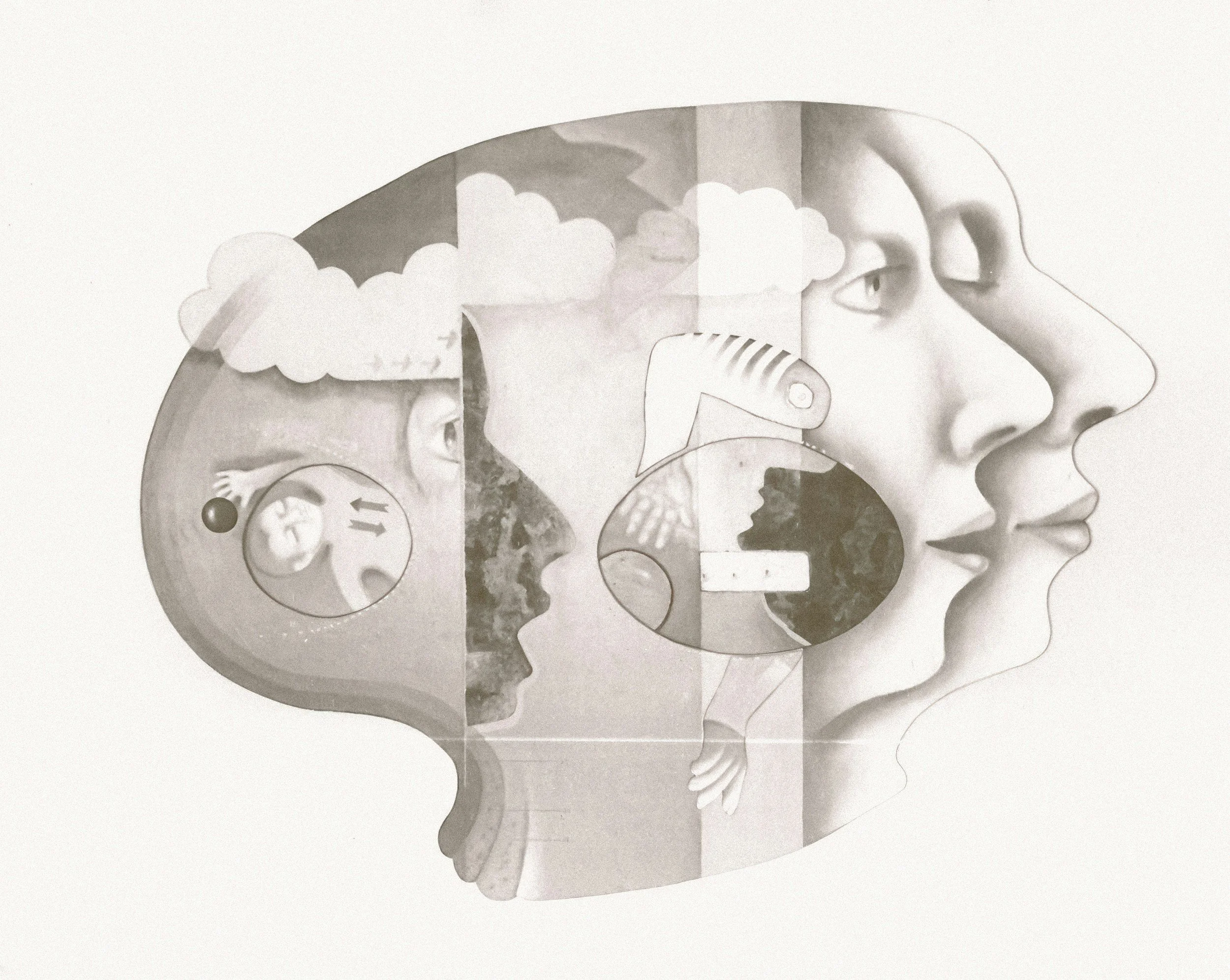
For many people, sex is supposed to be spontaneous, passionate, and enjoyable. Instead, it becomes something entirely different. Rather than feeling immersed in the experience, they find themselves thinking constantly. They wonder if they are taking too long to orgasm. They worry about whether their partner is enjoying themselves. They notice every distraction, every perceived flaw in their body, every shift in their partner's expression. Instead of experiencing intimacy, they feel as though they are observing themselves from the outside.
As a couples therapist, I hear this concern surprisingly often, particularly from men, although women experience it too. Clients describe feeling trapped in a running commentary inside their minds. They might say, "I can't stop thinking," or, "I just can't relax." Others worry that if they do not orgasm quickly enough, their partner will become frustrated or assume they are not attractive. Some become so focused on trying to perform well that they lose the very connection they were hoping to create.
If this sounds familiar, there is good news. There is nothing unusual about this experience, and it does not necessarily mean something is wrong with your relationship or your body. More often, it means your brain has shifted into evaluation mode instead of connection mode. Fortunately, that pattern can change.
Your Brain Thinks It Is Solving a Problem
The human brain is remarkably good at analyzing, predicting, planning, and solving problems. Those abilities help us succeed at work, raise children, manage finances, and navigate everyday life. The problem is that your analytical brain is not especially helpful during sex.
Researchers have long described a phenomenon in which people mentally step outside the experience and begin evaluating themselves instead of participating in it. Instead of noticing physical sensations, they become preoccupied with questions that have no immediate answer. Am I doing this right? Does my partner think I am attractive? Why is this taking so long? What if I lose my erection? Why can't I finish?
The moment your attention shifts from experiencing to evaluating, your nervous system changes. Rather than remaining curious and present, you become self-conscious. Your body begins responding to pressure instead of pleasure.
This is particularly common among people who hold themselves to high standards in other areas of life. Professionals, perfectionists, high achievers, and people who pride themselves on competence often assume that if they simply try harder, they can solve the problem. Ironically, trying harder usually creates more tension. Sex is one of the few areas of life where effort often produces the opposite of the desired result.
When Sex Becomes a Performance
Many couples unintentionally begin treating sex like a performance with measurable outcomes. Orgasm becomes the goal. Erections become proof of masculinity. Lubrication becomes proof of desire. Frequency becomes evidence of relationship health.
When that happens, intimacy quietly shifts from connection to achievement.
Instead of wondering, "How close do I feel to my partner?" people begin wondering:
Am I satisfying them?
Am I taking too long?
Why can't I climax?
Am I disappointing them?
What if they think something is wrong with me?
Those thoughts create pressure, and pressure is rarely an aphrodisiac.
What makes this particularly painful is that most partners are not judging nearly as harshly as the person judging themselves. Often, the partner simply wants to feel emotionally close, while the anxious partner is carrying an invisible burden of self-criticism that has little to do with what is actually happening in the room.
Over time, couples can become caught in a cycle. One partner becomes increasingly anxious about performance. The other senses emotional distance and wonders why their partner seems distracted. Both people leave the experience feeling disconnected, even though both desperately wanted closeness.
Your Nervous System Cannot Feel Safe and Threatened at the Same Time
Although most people do not think of sex as involving the nervous system, it plays a central role in sexual response. The body responds very differently when it feels safe than when it perceives threat.
The "threat" does not have to be physical danger. It can be fear of rejection, embarrassment, failure, criticism, or disappointing someone you love. Your brain does not always distinguish between emotional threats and physical ones. If your mind interprets the situation as something that must be managed or controlled, it naturally becomes more vigilant.
Stress from everyday life also follows us into the bedroom. Deadlines at work, financial worries, parenting responsibilities, unresolved arguments, body image concerns, and lack of sleep all compete for attention. Many people expect desire to simply appear despite carrying the weight of an overwhelming life.
It is worth asking yourself whether your mind has become accustomed to constant vigilance. If your brain rarely gets permission to rest during the day, it is unlikely to suddenly become quiet simply because intimacy has begun.
Moving From Performance Back to Presence
The goal is not to eliminate every thought. Human minds think. The goal is to gently return your attention to the present whenever you notice yourself drifting into evaluation.
Instead of asking, "How am I doing?" begin asking, "What am I experiencing right now?"
Notice your breathing.
Notice the warmth of your partner's skin.
Notice the sound of their voice.
Notice your own physical sensations without judging them.
Rather than trying to force desire or orgasm, allow yourself to become curious about the experience itself.
Some couples find it helpful to slow everything down. Ironically, removing pressure often creates the very conditions that make pleasure possible. Intimacy becomes less about reaching a destination and more about sharing an experience together.
Other practices that can help include:
Having honest conversations outside the bedroom about expectations.
Letting go of the idea that every sexual experience must end in orgasm.
Reducing distractions by creating intentional time together.
Practicing mindfulness or breathing exercises to calm the nervous system.
Remembering that connection is more important than performance.
For many couples, these small shifts gradually transform the emotional atmosphere around sex.
Sometimes the Bedroom Is Revealing a Bigger Story
If you repeatedly find yourself trapped in your thoughts during sex, it may be worth looking beyond the bedroom itself. Anxiety during intimacy is sometimes connected to unresolved relationship conflict, chronic stress, depression, past trauma, perfectionism, or deeply held beliefs about sexuality that developed years earlier.
That does not mean you are broken. It means your sexual relationship is reflecting something important about your emotional life.
The encouraging news is that these patterns are highly treatable. Couples therapy and sex therapy often help people understand not only what is happening during intimacy, but why it is happening. As emotional safety grows, communication improves, and pressure decreases, many people discover they are finally able to relax into experiences that once felt tense or exhausting.
Healthy sexuality is not about flawless performance. It is not measured by speed, frequency, or whether every encounter unfolds perfectly. At its best, sex is an opportunity to know and be known, to experience pleasure without constant evaluation, and to connect with someone you love in a way that is deeply human.
If you have been wondering why you are so in your head during sex, the answer is probably not that you are doing something wrong. More likely, your mind has become so focused on protecting you from failure that it has forgotten how to simply be present. The beautiful thing about presence is that it can be learned. With patience, self-compassion, and open conversations with your partner, it is entirely possible to move from performing intimacy to truly experiencing it.
About Alison York, LCMHC
Alison York is a Licensed Clinical Mental Health Counselor in Raleigh, North Carolina, specializing in couples counseling and relationship therapy. She helps couples strengthen emotional intimacy, improve communication, navigate desire differences, rebuild trust, and create more connected relationships. If you and your partner feel stuck in recurring patterns that are affecting your emotional or physical intimacy, couples therapy can help you understand what's happening beneath the surface and create lasting change.